Head office
Koforidua
Eastern Region. Seven staff, including the director, the accountant and the child protection lead. Covers Eastern, Volta and Ashanti.
P.O. Box KF 1187, Koforidua
Where we work
We work where we can get to a household within a day and back again — and we stop working there once the household no longer needs the visit.
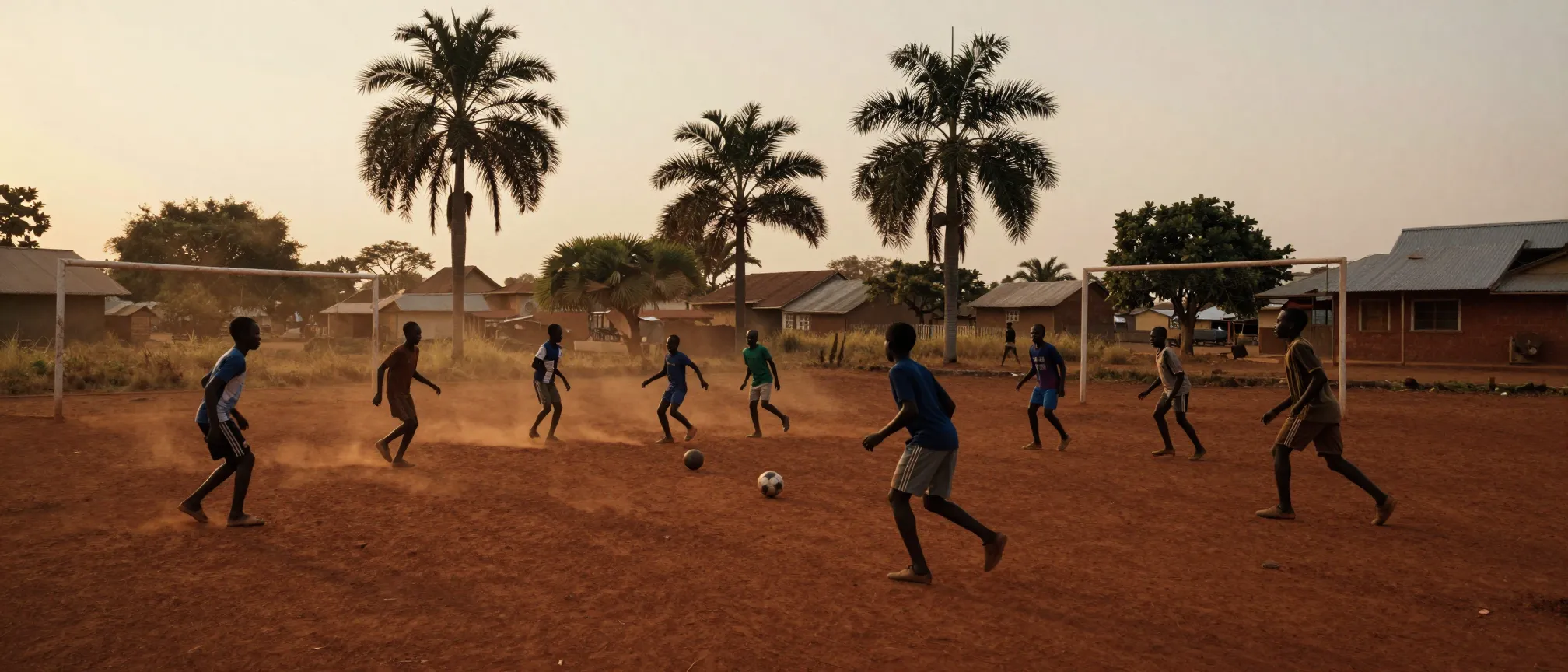
Our work is concentrated in the Eastern Region, where we started, and spreads outward only where a district Social Welfare office has asked us to come.
| Region | Communities | Children | Since | Run from |
|---|---|---|---|---|
| Eastern | 11 | 574 | 2011 | Koforidua |
| Greater Accra | 5 | 241 | 2016 | Accra |
| Volta | 4 | 188 | 2018 | Koforidua |
| Ashanti | 3 | 132 | 2020 | Koforidua |
| Northern | 2 | 78 | 2023 | Tamale |
| Upper East | 1 | 35 | 2024 | Tamale |
Three small offices, each within reach of the communities it serves. No child’s file is held more than two hours from the child.
Head office
Eastern Region. Seven staff, including the director, the accountant and the child protection lead. Covers Eastern, Volta and Ashanti.
P.O. Box KF 1187, Koforidua
Field office
Greater Accra. Four staff. Works mainly with households in peri-urban settlements on the Accra–Nsawam road, where separation is driven by rent rather than harvest.
Address to be added
Field office
Northern Region. Three staff, opened 2023. Covers Northern and Upper East, where distances are longer and the school year turns on the harvest.
Address to be added
We go where we are invited, where we can reach the households, and where someone will still be there after we leave.
Every programme begins with a written request from the district Department of Social Welfare. Without a district caseworker to hand the files to in year three, there is no exit.
We look for the pattern, not the poverty: children leaving for residential homes, being moved between households, or dropping out at the same point each year.
Follow-up is the whole programme. A community we cannot visit unannounced is a community we cannot be responsible for.
If another organisation is running the same work in that district, we send the district our method and our costs, and we go somewhere else.
Every community we enter has a date we plan to leave. Two have already reached it.
A handover happens when three things are true: caregivers are paying their own school costs from household income, the savings groups have run for four cycles without our officer in the room, and the district caseworker holds the files.
Entered 2011 with 48 children. Three savings groups still meet weekly. We return once a year for a check, at the community’s invitation, not ours.
Entered 2017 with 61 children. Forty-one completed junior high. The catch-up class is now run by the school itself, with two of its former pupils teaching.
Handover is not the end of the relationship. It is the end of the funding. If a household falls back, the district office can refer it to us again — and eleven have.
Partners — companies, churches, diaspora associations and foundations — take on a whole community from entry to handover.